1.avif)
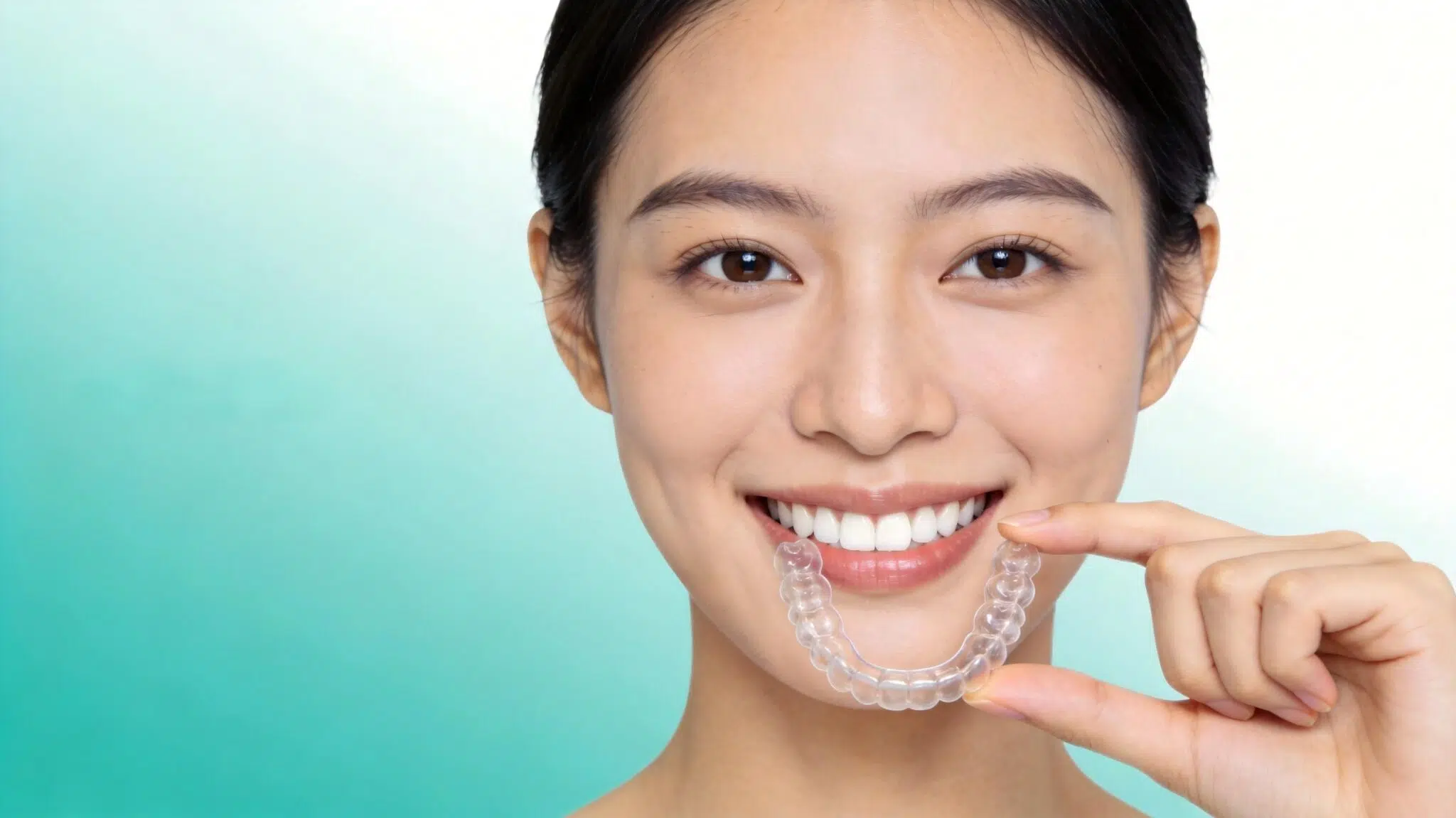
In clinical consultations at the orthodontics department, patients are most often concerned about aesthetic issues. Complaints such as "I think my teeth stick out a little", "I don’t look good when smiling", or "I want to close the gaps between my teeth" are the most common reasons for seeking treatment — as if orthodontic treatment (commonly known as braces) is solely for improving one’s appearance. However, orthodontic therapy is far more than just aesthetics; it also relates to oral function and health.
Crowded teeth are hard to clean and can affect periodontal health.
Many citizens hold a misunderstanding: they believe that slightly misaligned teeth and minor occlusal deviations are merely aesthetic issues and do no harm if left untreated. This mindset is similar to focusing only on whether the wall paint looks bright when renovating a house, while ignoring deeper problems such as whether the foundation is stable and if the water pipes leak. In fact, orthodontics is by no means a simple "minor cosmetic procedure", but a rigorous medical practice.
First of all, tooth alignment directly affects oral hygiene and periodontal health. In cases of severe dental crowding, numerous hard-to-clean dead spaces form between teeth, and toothbrush bristles often cannot reach overlapping areas during brushing. Food debris and dental plaque accumulate in these gaps, which can easily trigger tooth decay and gingivitis. If neglected for a long time, the condition may further develop into periodontal disease, resulting in gum recession and even alveolar bone loss.
Clinically, there are many middle-aged cases. When they were young, they did not take the problem of crowded teeth seriously. As they grew older, the compressed teeth became loose or developed periodontal problems, prompting them to seek treatment. At this stage, a great deal of time is often required to control periodontal disease before subsequent orthodontic treatment can begin.
Malocclusion: jaw pain, tooth wear
Beyond cleaning considerations, a deeper factor lies in occlusion. Teeth are organs that humans use extremely frequently every day. The upper and lower sets of teeth function like precision gears, requiring accurate occlusal contact to operate smoothly.
Common malocclusions, such asdeep bite, meaning the upper front teeth excessively overlap the lower ones. Medically, a deep bite means the lower teeth may repeatedly bite the gum tissue inside the upper jaw over time or cause excessive wear on the incisal edges of the lower front teeth.
Another common case isopen bitethat is, the upper and lower front teeth cannot make normal contact. This prevents patients from using their front teeth to cut food (such as biting through rice noodles or vegetables), forcing all chewing force onto the back molars. Over time, the rear teeth will suffer increased wear and cracks due to excessive load. Meanwhile, the unbalanced occlusion may place stress on the temporomandibular joint (jaw joint) responsible for opening and closing the mouth, triggering joint clicking or pain.
The ultimate goal of orthodontics: health, stability and complete function
The ultimate goal of orthodontic treatment is to establish a healthy, stable and fully functional oral environment. A good occlusal relationship can distribute masticatory force evenly, preventing individual teeth from being overloaded due to excessive stress and allowing the teeth to remain healthy for long-term use.
While the aesthetic improvement brought by orthodontic treatment is certainly important, function and health are the core of the treatment. If you have any concerns, consult an orthodontist. A thorough clinical examination and X-ray analysis will be conducted to develop the most suitable treatment plan. Do not let the misconception that orthodontics is "only for cosmetic purposes" jeopardize the long-term health of your oral cavity.
AI and Orthodontic: When Scientific Research Enters Clinical Practice
Orthodontic expertise is reflected not only in clinical judgment but also in increasingly precise diagnosis and design. In recent years, the AI team led by Professor Lam Yee Fan from the Faculty of Dentistry, The University of Hong Kong and Professor Chen Hao from the Department of Computer Science and Engineering, The Hong Kong University of Science and Technology, together with DBT Technology, a technology partner focusing on dental artificial intelligence®, published a series of studies integrating AI into every stage of orthodontic treatment:
1. AI Mandibular Assessment on Panoramic X-ray
The research team trained the AI with 1,038 panoramic (OPG) X-ray images, enabling the model to automatically identify mandibular landmarks with an average error of less than 1 mm, objectively assess the degree of mandibular asymmetry, and provide more accurate quantitative evidence for orthodontic diagnosis.
Qu W, Qiu Z, Lam KC, Sakaran KG, Chen H, Lin Y. Artificial intelligence-assisted identification and assessment of mandibular asymmetry on panoramic radiography. Am J Orthod Dentofacial Orthop. 2025;168(1):14-23.e2. PubMed 40047777
2. Multimodal Tooth Segmentation (ToothMCL)
Integrating CBCT volumetric images and intraoral scan surface images to build the largest paired dataset to date (3,867 patients), enabling AI to more accurately "recognize" each tooth and its tooth number — this serves as the technical foundation for automatic tooth arrangement and aligner design.
Son MH, Bae J, Qiu Z, Peng J, Li KX, Lin Y, Chen H. Multimodal Contrastive Pretraining of CBCT and IOS for Enhanced Tooth Segmentation. arXiv:2509.07923
3. AI Personalized Crown Generation (CrownGen)
Automatically generate patient-specific crown morphology using a point diffusion model; clinical evaluations show that its quality is "non-inferior" to manual designs by senior technicians, while greatly shortening the design time.
Bae J, Son MH, Peng J, Qu W, Chen W, Qiu Z, Li K, Chen X, Lin Y, Chen H. CrownGen: Patient-customized Crown Generation via Point Diffusion Model. arXiv:2512.21890

These three research projects led by teams from top Hong Kong institutions perfectly illustrate that orthodontics and restorative treatment are entering a new phase, shifting from "experience-dependent" to "human-machine collaboration". Lulusmiles is one of the pioneers applying this set of AI technology to clear aligners — the digital dental artificial intelligence provided by DBT Technology runs through every step including 3D intraoral scanning, AI diagnosis, personalized treatment planning and remote progress tracking, enabling more people to receive dentist-supervised orthodontic services with higher efficiency and at a more affordable price.
Authors and Research Team

林倚帆教授(Professor Lin Yifan)
Professor Lin Yifan is currently Clinical Assistant Professor in Orthodontics at the Faculty of Dentistry, The University of Hong Kong, and serves as the Programme Director for the undergraduate orthodontic programme of the Faculty. She obtained her Doctor of Stomatology from Peking University and Doctor of Philosophy from The University of Hong Kong. She holds professional qualifications including Fellow in Dental Surgery of the Royal College of Surgeons of Edinburgh (FDS RCSEd) and Member in Orthodontics of the Royal College of Surgeons of Edinburgh (MOrth RCSEd). Her research interests cover clinical orthodontic diagnosis and treatment, bone biology and periodontal regeneration. Her team has won numerous international awards, including the IADR GC Centennial Research Fund and the American Association of Orthodontists Annual Case Report Award.

陳浩教授(Professor Hao Chen)
Professor Chen Hao is currently an Assistant Professor in the Department of Computer Science and Engineering, the Department of Chemical and Biological Engineering and the Division of Life Science at the Hong Kong University of Science and Technology, and serves as the Director of the Joint Innovation Centre for Medicine-Engineering Interdisciplinarity. He leads the SmartX Lab, focusing on the applications of trustworthy artificial intelligence in healthcare. He obtained his PhD from The Chinese University of Hong Kong in 2017. To date, he has published more than 200 papers and received numerous honours including being selected as a Fellow of the Asian Young Scientists Foundation (2023).
The main content of this article is adapted and compiled from Professor Lin Yifan’s column article “Orthodontic Is More Than Just Improving Appearance” published in *Hong Kong Ming Pao Newspaper* (16 February 2026). The original article was released by the Faculty of Dentistry, the University of Hong Kong.
Source:https://facdent.hku.hk/news/media/2026/202602/20260216.php
Photo sources: Professor Lin Yifan's photo is taken from the official website of the Faculty of Dentistry, the University of Hong Kong; Professor Chen Hao's photo is taken from the official website of the Hong Kong University of Science and Technology.
※ The content of this article is for health science popularization reference only and cannot replace professional diagnosis and treatment advice from dentists.